Ripples In The Calm

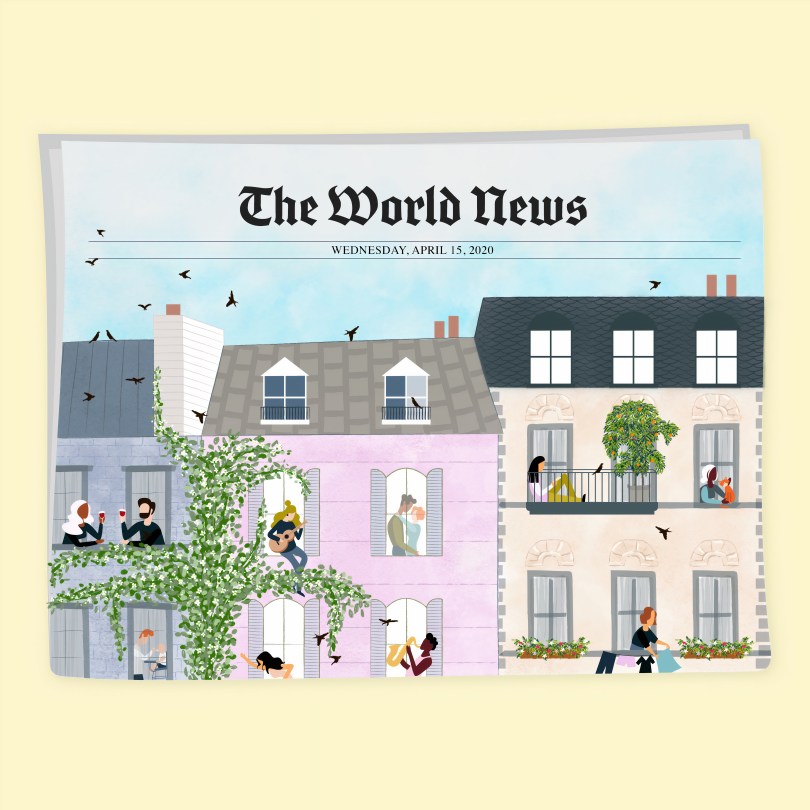
“What’s new?” is a question that has become increasingly difficult to answer these days. Since the emergence of Covid in the early part of 2020, and the lockdowns that followed it, a lot of us have been spending a lot of time at home. A vast number of offices have shifted to the work-from-home paradigm, at least for now. Public places like malls and cinema halls were either closed, or running with restrictions. Many people have voluntarily cut down on any unnecessary activities. Overall, for one reason or another, most of us are now less active and outdoorsy this year, compared to the same time last year.

I’m no different. Being a bit of an introvert, I wasn’t very outgoing in the first place. And now with all this, I’ve become a total hermit! Consequently, “what’s new?” has become a dreaded question, as there’s nothing new happening at all. Everyday seems the same, same as the previous few months. Life seems to be stuck, and the silence of the stillness is getting louder and louder. But, as they say, there’s a silver lining to every cloud, and this silence has also shown me a few.

One of those is a lesson that I realized recently, and that I want to talk about today. And that is: The more emotionally engaged we are, the less we are affected by the smaller things.

What I mean by “emotional engagement” is being preoccupied by things or events that directly make us happy or sad, or that serve as a conduit leading to other things that elicit some kind of an emotional response from us. 

For example: The birth of a child, or the passing away of a loved one. These would be the biggest emotionally engaging events I believe. But there are other things too, albeit to a lesser extent presumably. Adjusting in a new environment like a new city or a new job. Waiting and anticipating the results of something you have worked very hard for, for a long time like exams, sporting competitions, artistic projects, etc.. Even politics has become quite a roller-coaster of emotions these days.

The point is: the more such things we have in our lives, or the stronger their pull, the less effect we would feel from the other smaller stuff happening to us at the same time.

We wouldn’t be bothered by water damage from a plumbing leak when we are already going through a personal tragedy. An artist wouldn’t be as elated after winning a lottery worth a thousand dollars, if her recently released work, for which she had worked for years, was a critical success, even though it might be a commercial failure. Again, the idea is that the minor things don’t seem to matter so much when you are dealing with bigger things in life. 

However, when there’s stillness, when there’s nothing happening in our life, then the same minor things can affect our emotional stability in more significant ways. A small argument with the neighbor can seem like a very big deal. A missed opportunity for an inconsequential thing, in the larger scheme of things, can give us sleepless nights. Not being able to get a simple task done can plunge us into the abyss of self-doubt. It doesn’t take much for tears, or a laugh, for that matter.

A choppy sea is not affected by a rock, but throw the same into a still lake, and it will cause ripples.

Of course, this may not be news to many of you. Now that I think of it, it kinda seems obvious even to myself. But sometimes, and I’ve said this before also, there’s a difference between knowing something and realizing something. The stillness in my life these past few days made me realize this simple lesson only now.

* * *

But realization is just the first step. The real benefit from it comes when we use it to improve our lives and relationships.

So, next time, if, and when, we find ourselves flustered or flattered by even the smallest of things, we might want to take a look at the rest of our life, and see if a lack of a more powerful stimulus is causing us to feel that way at that moment.

Obviously, that is not to say that having a bigger negative experience is to be preferred over the nuisance caused by these trifles. But when we find ourselves in such a situation, what we can do is to find, or create, a stronger positive event or goal in our life. When our focus will be on that, we won’t notice those trifles.

The rock can’t cause ripples in a choppy sea. And neither in a river flowing with force. We need to find or create that river that flows with a force of purpose.

* * *

Another way we can benefit from today’s lesson is by observing those around us, and understanding them better.

Do you find your family members getting irritated easily? Do you see your friends getting into debates about the smallest of things? Maybe they’re stuck too? Maybe they need help seeing, and finding, a path that’s more fulfilling? At the very least, it can help us understand where they are coming from, and why they react the way they do.

* * *

Well, that’s all for this silver lining today. The stillness that I keep referring to has shown me some others as well. But more on those later. Hope you liked today’s post. And as always, I’d love to hear your thoughts on it!

Till next time. Be well!


For more such posts, please follow Echoes In The Ether on Facebook, WordPress, or Medium.


Photo by Linus Nylund on Unsplash

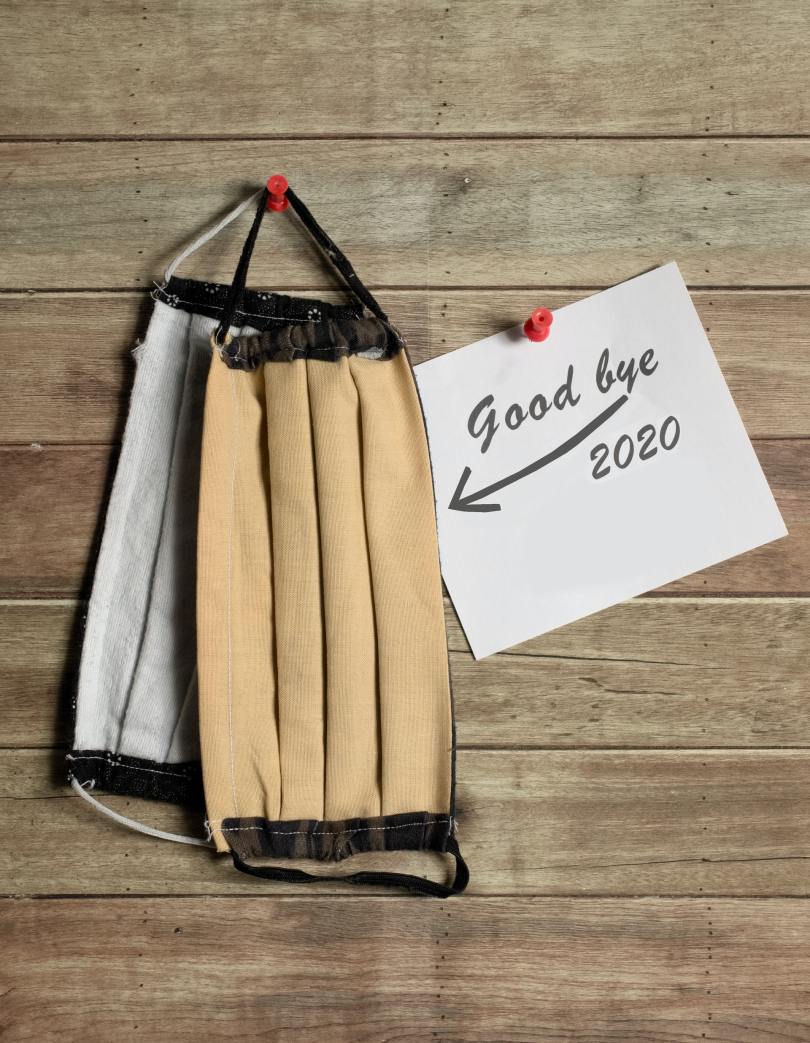
Goodbye 2020!

Finally, we are here! The end of 2020. What a year this was!

Needless to say, when I wrote a post welcoming 2020 at the end of last year, I had no fricking idea this is how it was going to turn out. So much so that I’m now apprehensive about writing a post to welcome 2021 this time.. 😆

So, today’s post is just a quick look back at the year that was.

If you are thinking what else could be the highlight of the year but Coronavirus, let me tell you, despite that looming, omnipresent threat, it was not the highlight of the year for me.

Read More »

The Meaning & Purpose Of Life

The meaning of life is to find your gift. The purpose of life is to give it away.

Pablo Picasso

So, I came across this quote recently. And it made me stop and think a bit. So, obviously, I had to share it with you guys. 😄

[ Note that even though I’m attributing it to Pablo Picasso, there seems to be some doubt about the accuracy of that. People much smarter than me have tried to find the true source of the quote, but it’s still not exactly clear. So, for now, I’m just going to trust the good people at goodreads.com who ascribe it to Picasso, and run with it. ]

The first thing it made me realize was that I didn’t have a clear enough picture of the difference between “meaning of life” and “purpose of life”. I knew they were not the same, but I couldn’t exactly put my finger on it. Kind of looking at something through a misty haze – you feel there’s something there, but don’t know what precisely.

Before I go into a long-winded exposition on the difference between these: What do you think? Do you know exactly what these two things mean to you? What are some of the things that give meaning and purpose to your life?

Read More »

The Lives That We Do Live

Today’s post is one of gratitude – the “grass is green here too” kind. To save your time, let me tell you beforehand: there’s no life lesson here or anything like that; just a pleasant experience I thought I’d write about now, and maybe, reminisce about one day down the line.

I think most people, at least at some point, think about how, to use the cliché, the “grass is greener on the other side”. I’m no different. A few days ago, I was in one of those moods where I wished to be lounging on the lush green grass on the other side of the fence.

But it suddenly struck me that I was actually rolling in some really soft and fresh grass on this side itself. And that too without putting too much effort into mowing the lawn!

Read More »

The Most Important Question

So, today’s post is based on an interesting observation a dear friend made sometime back. Before we get to that though, let’s start with some background.

For the curious mind, there are just too many questions out there. When did something happen, who did what, what was the reason for something, how things work, where things come from and go, etc.

There can be no end to questions, I think. The more we know, the more there is to know further. Look at science. There was a time when the atom was the smallest thing. One would’ve assumed that knowing that would be the end. But, no. Because even with that knowledge, we didn’t stop questioning. We wondered about what the atom itself was made of, how it worked, etc. Because of these questions, now we know that even the atom’s not the smallest thing (they are made of quarks, if you were wondering). And now, scientists are delving even further into these building blocks (the quarks).

And it applies to almost everything, not just science. Look at history, economics, human behavior, etc. Whenever we think we have nailed down something as an underlying fact, if we continue to ask more questions after that point, we can always find another level of detail.

The point is that questions are never-ending. There are always more questions we can ask, and when we do, we always get more answers. It may take time, but eventually, we get there.

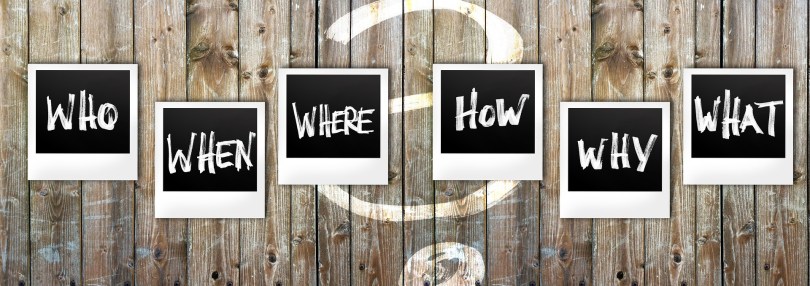
But, even though questions are inexhaustible, fundamentally, they all belong to one of these types: who, what, when, where, how, and why.

And this is the interesting observation that my friend made: these questions are not all equal. We can have an infinite number of questions, and we can funnel them into these six types, and although all of them have their own value, there’s one type that is most important, and also the most difficult one to answer. And that is the class of questions asking, “Why?”

It may not seem that big of a deal initially, but when I thought about it more, I realised how much more significant this question is, compared to the others, and how much impact it has in our lives.

The other questions are definitely important. But they are more… how should I put it.. “superficial” in a way. They are based on facts. If we have full knowledge of all the variables in the system, we can answer them.

But “Why?” That is another beast. It pushes us to explore outside the boundaries. It goes deeper, and wider, and surrounds us, and subsumes us.

As before, it’s not restricted to one domain. Any domain you look at, “Why?” is perhaps the most important question. Science, history, law, human behavior. Especially, human behavior. It’s even become somewhat of a corporate mantra these days, as popularized by Simon Sinek.

Compared to all the other “materialistic” questions, “Why?” is the “philosophical” one. It leads us to think about and discover new questions we didn’t even know we wanted to ask. 

But, it’s not for the faint of heart. When asked openly and courageously, it can show us a brutal reality we may not be ready to face. It can also lead to desperation, a feeling of helplessness in not knowing the answer. 

Or it can open our eyes, expand our horizons. It can take our awareness to another level in the journey of discovery. It’s more insightful than anything we know of. As someone who likes to think about these things, I was really taken in by how much more significant and profound “Why?” is compared to the other questions. It’s head and shoulders above the rest.

* * *

Once we realize the power of “Why?”, and can inculcate the habit of going back to it in our daily lives on a regular basis, it can be an eye-opener, and a guide for life. Here’s a simple exercise: think of any three things that are happening in your life right now. Something that you are working on, something someone said, something that happened at work. Anything. Even if not three, think of at least one such thing. And then ask “Why?”

It’s scary, and it’s beautiful.

And it’s worth asking. Every. Single. Time.


For more such posts, please follow Echoes In The Ether on Facebook, WordPress, or Medium.


Photo Credit: Gerd Altmann at Pixabay

Discovering Our Course

One recognizes one’s course by discovering the paths that stray from it.

– Albert Camus

This quote is taken from Albert Camus’ essay “The Myth Of Sisyphus”. And I wouldn’t blame you if it sounds confusing to you. I had first come across this quote a while back. And while I don’t remember exactly how I felt about it at that time, I think, now, with slightly more life experience, I can relate to it better.

Sometimes it is difficult to know where to go next in life, which path to pick. There are just so many possibilities, so many directions that one’s life can take. It’s not the case for everyone, though – there are people who clearly know what they want from life, and how to get there.

But if you are like me, you probably have been a bit confused, at least at some point, about where your life was headed. I was at such a crossroad recently, and that’s when I realised one interpretation of this quote that was applicable to me.

Of course, different people may have different interpretations of it. And I haven’t read the source essay to know full well in which context Camus said this himself. Still, based on just this one line, my interpretation is simply this: when you don’t know what you want, you decide based on what you don’t want. And sometimes, that gives you enough clarity to know what you wanted in the first place.

But as I was writing this, I realized, it’s not even just about “wanting” or “not wanting” things – it can be extended to other things as well. For example: You discover what kind of a person you are, by finding out what things you just can’t do or support or stand for.

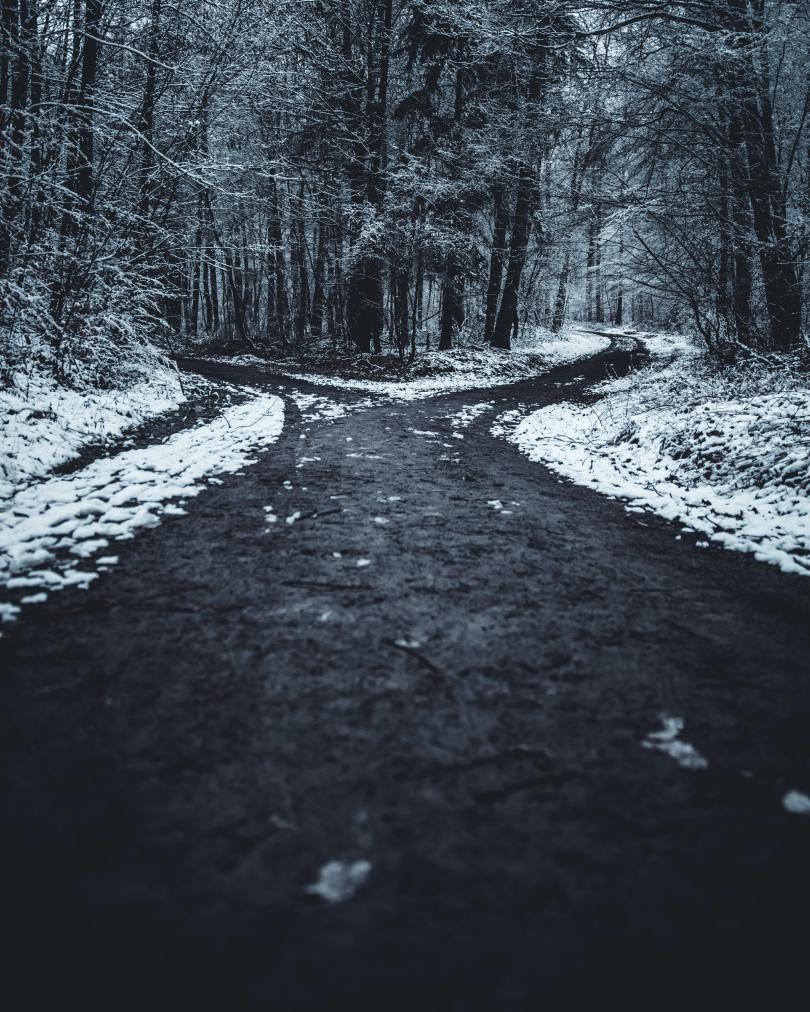
The things that you don’t want are basically paths diverging from the road that you are on currently.

By knowing what we don’t want, what we are not, where we don’t want to end up, etc., we get a step closer to understanding the truth behind it – what we want, who we are, where we are going.

Imagine it like this: you are travelling on the highway, with no specific destination in mind. At regular intervals, there are exits. One exit will take you to city A, another to city B, and so on. As you encounter these exits, one-by-one, by either taking or not taking one of them, you are deciding the final city where you’ll end up, which will ultimately determine what course you took in your journey.

So, I think the point here is when we encounter these “exits” or paths, we should be mindful, as that will determine where we end up in life. Sometimes, we are just so used to “driving”, that we don’t even realise when we make a left turn here or right turn there. We are on “auto-pilot” mode, just going through the motions. But life doesn’t always present a U-turn for you to go back and make a different choice the next time.


For more such posts, please follow Echoes In The Ether on Facebook, WordPress, or Medium.


A Fork In The Road

Alternatives. Options. Choices. 

It seems like a good thing having them in life, no? Who wouldn’t want that? Where you had one thing earlier, now you have more. Where you could do something one way only, now you can do it in different ways. In general, having alternatives seems beneficial, a good situation to be in. Problems of plenty, right? 🙂

But recently I realized that it may not always be such a good idea. At least for someone like me. Specially, when it is not just a case of “which”, but of “whether”. And there’s a big difference between the two. Let me try to explain with an example.Read More »

COVID-19 & Us

Hello. Been a while. 

I last posted on this blog at the end of last year. I was hopeful for the year that was about to come. But, as life can do from time to time, it surprised me.

Though there have been some good moments this year, there have been some bad ones too.  But more than anything, it’s the big cloud that we are all living under that has cast a shadow over everything.

I’d been wanting to write at least something for some time now. And it’s not like I don’t have things to talk about. But life has been surprisingly busy this year. Or maybe I’ve become lazier. Whatever be the reason, the point is, there wasn’t enough motivation. But today, I’m taking a bath (cue the motivation-is-like-a-bath quote). 

But I can’t write about the usual stuff I post here, not yet. Talking about anything else feels like ignoring the elephant in the room. I’m, of course, referring to the crisis that the world is facing today in the form of COVID-19.

So, today, let’s talk about that only. Read More »

Welcome 2020!

So, this is going to be my last post… Don’t worry, I’m not going anywhere; it’s just going to be my last post of this year. 😉

I find endings to be bitter-sweet. I guess most people feel the same way, no? These endings could be of something as trivial as a vacation or a year, or of things that mean much more – like the end of a phase of your life, a relationship, etc.

Ultimately, the end signifies something that was with you, that was in your life – was your life – for a while, and now that thing won’t be there any more. You have memories of it – good or bad, but important memories nonetheless. That association with the thing that’s ending has left an imprint on your life. You are the person you are because of it, to some extent.

And it is true that the next chapter can begin only after the previous one ends. You can’t appreciate the beauty of the mountains while you are enjoying the sun on the beach! 🙂

I had a good year overall. Grew personally and professionally. Had some important new experiences. Wish I had done better with my writing, but, now, I’m just being greedy. 😀

So, yeah. It’s sad when something good comes to an end. But that end also brings with itself possibilities – possibilities of even better things. A clean slate. A fresh start. The chance to do things not done before; to experience things never experienced before. To see things, never seen before. And importantly, to even see the same things, like we haven’t seen them before.

So, on that note, let’s wrap up this year with hope in our hearts for an even better time in the coming one. 

Wish all the dear readers of this quaint little blog, and to everyone else too, a very, very Happy New Year!! 

See you on the other side.. 🙂


Photo by Crazy nana on Unsplash

Beyond Right & Wrong

Out beyond ideas of wrongdoing and rightdoing, there is a field. I’ll meet you there.

– Rumi


If you’ve been a regular reader of this blog, you might’ve noticed that I share quotes from time to time – quotes that I like, and that mean something to me. It’s been a while since I last shared one, so I thought that’s what I’ll write about for this post.

The above quote is a translated version of a verse taken from the 13th century Persian poet Rumi’s poem, A Great Wagon. I’m not going to try to explain what he might have meant by this quote, as there are plenty of interpretations of its meaning already, and who really knows what he had in mind when he thought of this line? All we can do is guess based on our understanding.

So, what I am going to do is tell you why I like this quote myself – what it means to me or reminds me of. It may very well not be what Rumi might’ve intended, but to be honest, I don’t think he really would’ve even imagined that people would be talking about this line of his hundreds of years in the future! 🙂

So, here’s why I like this quote:Read More »