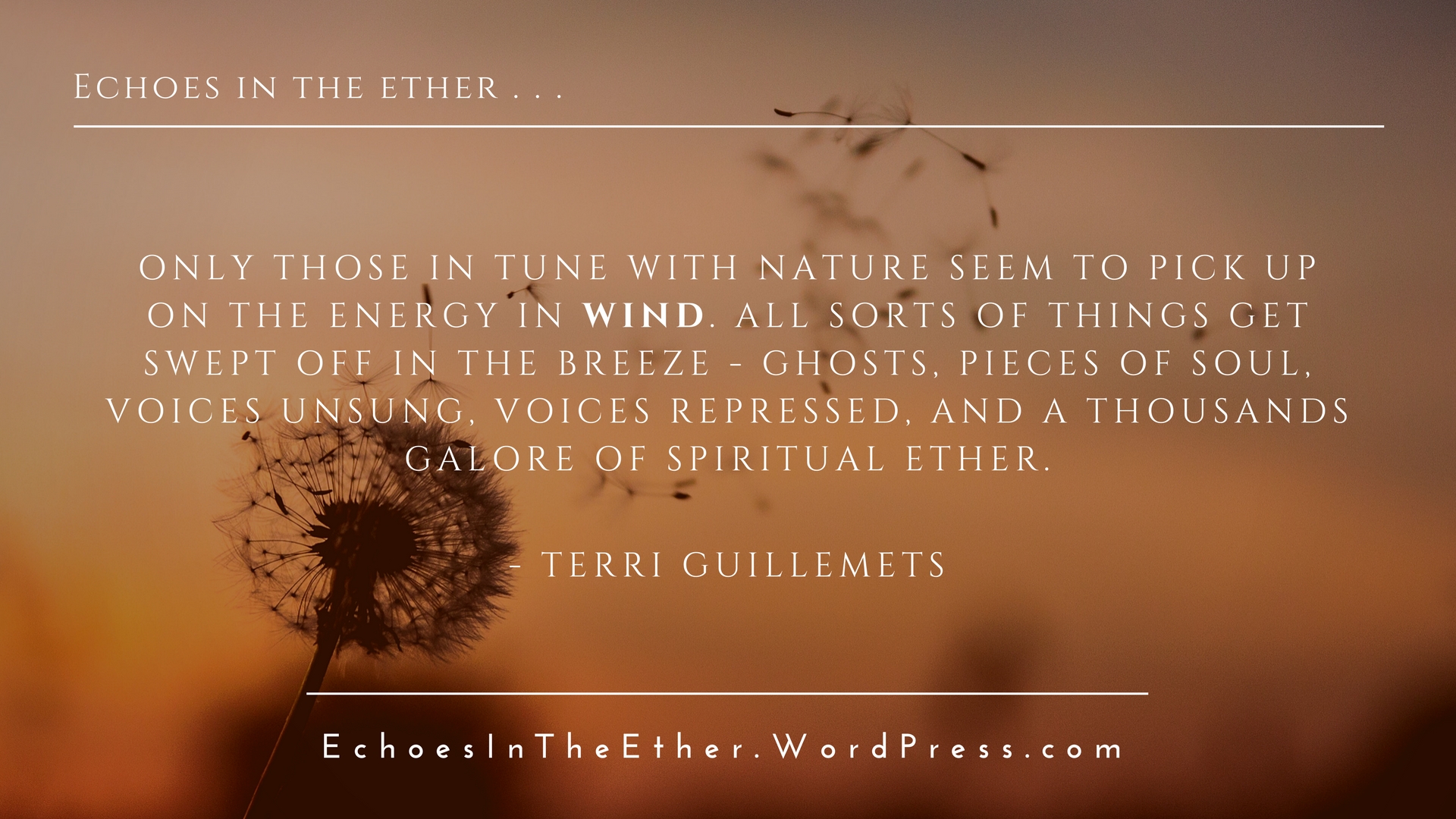
The Relationship Between Words & Reality

Lately, I’ve been noticing a lot more instances of the gap between what reality is, and the words which we use to describe it. And it impressed upon me how limited words are in their capacity. Reality, on the other hand, quite literally, encompasses all there is.

Yet, when talking about things, people, ideas, we tend to get caught up in the words that are used. Not only that, words are not even objective; they are highly subjective. The same words can mean different things to different people, depending on their own personal journeys. (I’ve talked about this before, and if you’d like to explore this idea in slightly more detail, you can check out my post, “What Do You See And Hear?”)

Now imagine using something so limited and subjective like human vocabulary to describe the utterly rich and complex reality of the world around us. When we stop to think about it, it shouldn’t be surprising that there’s a huge gap between what we can describe with words, and the real thing.

But as Boyzone said, “It’s only words. And words are all I have.” We have to do with what we have. So, I’m not saying that we should just give up on using words to talk about things. But what we should do is to try and avoid getting boxed in by these words. We should remember that no matter what words we use, no matter how well we articulate something, reality will be, more often than not, way more than that.

The key is experience. We need to really live the thing we talk about to fully grasp and appreciate it. And until we can do that, we will do well to remember: it’s only words. And words are not enough.

Oh, and yeah, the irony of using words to describe how words are not sufficient to describe reality is not lost on me! 😅


For more such posts, please follow Echoes In The Ether on Instagram, Facebook, WordPress, or Medium.


Credits: Quote by yours truly. Image created with Canva.

People And Their Stories

Just one of those days today. Contemplative. Thinking about the connections I have made over the years with people. Now that I think about it, it’s only natural to be in this mood, this time of the year: ‘tis the season! The year-end holidays give us an opportunity to pause and to look back on the year gone by. And sometimes, on more than just the current year.

Have you also ever reflected on the people you’ve crossed paths with in your journey? And I’m not talking about family. We are kind of born into this group of people. I’m talking about friends, partners, colleagues, and even strangers in some cases.

At this point, I’d encourage you to think about someone whom you know well now, who is important to you, but who was once a stranger.

Now think about how, over time, you have come to trust, rely on, and confide in this person, who was once upon a time a total stranger.

I’m guessing you guys found a mutual connection somewhere. Of course, the connection would’ve solidified and become stronger over time, but the potential of this connection was always there, wasn’t it? Yet did you really know that one day, you would connect with this person this way, when you had first met them?

And that brings me to the point of my post today: there is so, so much more to people than what first meets the eye!

Every person has a story. Every person is a story. Every. Single. One. 

And sometimes, we tend to forget just how deep and rich these stories can be! There are so many little things that make us who we are today. Things we have done, things that interest us, things that we want to do, things that keep us going.

It’s easy to get caught up in the fast-paced life of today. Everyone is rushing from one thing to another, one day to another. Work, family, friends, our own interests, everything demands our time and attention. It’s rare to find people who can say they have extra time in their life; most of us always have more things to do than what we can manage.

In this rush, it’s easy to see people, and yet not really see them. We come across so many people today, whether through work, social media, dating apps, travel, whatever. And when we meet all these people, we quickly put them into buckets, based on broad categorization criteria like their appearances, or job profile, or family background, or a myriad of other ways..

But people are more than that, aren’t they? Aren’t you

A lot of what makes us, us, are the little details about our lives. The pet projects and pet peeves that we have. The quirks, the edges. 

I think most of us go through “phases” in our life. During any one of these phases, we are very much into one particular thing or another. Some examples: those years or months when you were into sports. Or gymming, gaming, singing, reading, learning a foreign language, baking, traveling, blogging… The list can be endless. These are like the sub-plots in our “main” storyline. We do these on the side, while on our main journey of studying, working, dating, family, etc.

Sometimes, one of these “phases” consumes us enough that we want to pursue it rigorously. We may decide to take it up as a career, or stay invested in it some way or another for life. Most of the time, we simply outgrow these phases. Sometimes, we move on to a different phase. Sometimes, we get so caught up in our “main” storyline, that all these other things seem childish and a waste of time.

But irrespective of what happens to these phases in the end, the fact remains that at some point, they were a significant part of our life. And I feel that over a lifetime, these small things taken together is what really makes us unique. Millions of people do the job that I do. Millions come from similar socio-economic backgrounds. Millions might have the same kind of family structure that I have. Yet, everyone is unique. Why? Because no two people would’ve had the exact same kind of life because of these small details.

And I find getting to know these details about people fascinating! Discovering these tidbits about a person makes me feel more connected to them.

[As I write this, I realize this sense of “discovery” is a recurring theme with me. Few years ago, I talked about something similar, when I wrote about “the joy of discovering connections”.]

Anyway, getting back to the main theme of this post: A friend was recently telling me about one such phase of her life. And it made me feel like I was seeing this side of her that I had not known of before at all. And there’s so much that you learn about a person even from the smallest of things, isn’t it?! The reasons why someone gets into something, why they keep doing it, and why they stop. I had an even greater appreciation for this friend after getting to know this part of her life.

And it made me realize that there are so many such mini-stories within the main story of everyone’s life. And this is true not just for others, but for ourselves too! Which is something that at least I, personally, tend to forget sometimes.

But yeah, the thing I want to remember from that night, and the thing that I hope you’ll take away from this piece is this: people are way more than what meets the eye. So, ask them their stories. Of course, not everyone would be willing to share theirs with everyone else, but if they give you that privilege, recognize it as one. Ask them what things they were into as kids, as teens, as young adults. Even the things they are into now. And the things that piss them off. And the things they think about late at night when they can’t sleep. Really get to know them. It can be a beautiful and life-affirming experience.

And on a related note: look for opportunities to share your story too! Some people might find it hard to initiate talking about themselves. I do sometimes (Ok, maybe not in writing, but in person, yes.. 😅). We tend to overthink that why would someone else be bothered about these things about us, perhaps we shouldn’t bore everyone with our weirdness. But chances are they just might appreciate us sharing all of these things! I know I am glad that my friend decided to share that story.

If you are a F.R.I.E.N.D.S. fan, maybe you can relate to this example: Remember the series finale, where Monica reveals that Ross tried to make it as a dancer in New York, and Ross replies that they almost went 10 years without this topic coming up? Such a small detail, a passing reference really, and yet, didn’t we feel like we knew so much more about Ross just based on this one thing? Didn’t we feel more “connected” to the character?

As another year dawns tomorrow, perhaps this can be our new year resolution: that we will try to connect more with those around us – that we will encourage them to share their stories, that we will strive to be more open ourselves.

I don’t know about you, but it seems like a good idea to me! 🙂

* * *

On that note, I’ll wrap up for this year. On a personal front, this year was one of the toughest for me, for several reasons. Of course, I don’t want to lose sight of the fact that this year was far worse for so many others, owing to wars, climate catastrophes, natural disasters, poverty, political conflicts, etc. So, I’m just glad this year is in the rear-view mirror now for everyone.

Here’s hoping that the coming year brings a lot more peace, prosperity, health, happiness, laughter, and love for you, and for everyone around the world. The world really can do with some better days!

Wishing everyone a very Happy New Year! 🥂

See you on the other side.. 🙂 


For more such posts, please follow Echoes In The Ether on Instagram, Facebook, WordPress, or Medium.


Credits: Photo by Maegan Martin on Unsplash

Israel vs Hamas: Who Are The Good Guys Again?

There are very few things in life that can be classified easily into black or white; a lot of life is just some shade of gray. One blatantly black-and-white thing though is the killing of civilians in any armed conflict.

No matter how justified you may think your reasons are, no matter how justified they may actually even be, nothing, NOTHING can justify the killing of innocent, unarmed civilians.

The on-going conflict between Israel and Hamas has been an eye-opener in this context.

What Hamas did on October 7th, 2023 was an abhorrent and despicable act of terrorism. There can be no arguments against it. The Hamas organization can think it was fighting for a just cause all it wants, but targeting civilians, and that too in such a brutal and barbaric manner, is totally unacceptable. This act justly reinforced the “terrorist” tag on this organization.

However, what has been truly shocking is Israel’s response to this act of terrorism – a response that has been nothing short of inhumane, and a dastardly and blatant violation of basic human rights and international law. Like Hamas, Israel can try to justify its actions, saying it “has a right to defend itself”, but as mentioned before, killing civilians can never, ever be justified, no matter what.

At this point, I do want to differentiate between an elected government or organization, and the people who put them there. The actions of a selected few can not, and should not, be seen as the collective will of the populace. There are always those who would disagree with the actions of those governing them.

The common Palestinian or Gazan citizen does not represent Hamas. Similarly, the common Israeli citizen is not a stand-in for the Israeli government. Neither anti-semitism, nor Islamophobia, can have any room in civilized dialogue, even when one disagrees and actively opposes the respective government policies. Again, targeting civilians just because they happen to belong to a particular country or religion is unacceptable.

Despite this basic tenet of modern civilization, both Hamas and Israel did target civilians of the opposing side. Hamas targeted a music festival full of young people, as well as several peaceful communities along the border. The Israeli response has been even more indiscriminate, as it has targeted housing complexes, schools run by the United Nations (UN), World Health Organization (WHO) facilities, ambulances, other hospitals, UN shelters, International Committee of the Red Cross (ICRC) aid convoys, etc. And not to forget: the complete siege of Gaza, cutting off basic human necessities like water, food, medicines, fuel, telecommunications. And the apartheid, and ever increasing harassment, imprisonment, and elimination of the Palestinians, including children, in the West Bank.

This begs the question: how different are Hamas and Israel’s actions really? In their own minds, both have justifications for their actions (we don’t need to argue about whether those justifications are actually right or not at this juncture; the main point is both are convinced that their actions are just), and both have targeted and killed innocent civilians, including children. Yet, only one of these two entities is labeled a “terrorist”?

There are those who try to justify the actions of Israel, giving all sorts of excuses. Let’s talk about those.

The most common one is: Israel is “only targeting terror cells and infrastructure”, and is “doing its best to avoid any civilian casualties”. Really? By Israel’s own admission, one of its army tanks has hit an Egyptian post near the Gaza border, causing injuries to guards posted there. Israel has even apologized for a targeted missile strike around a group of journalists near the Lebanon border, that resulted in the death of a Reuters’ video journalist, while injuring others as well.

When the Israeli army can’t even target these areas that are far away from the center of the conflict accurately, killing and causing rampant damage in its rage-infested hubris, how naive, or stupid, does one have to be to think that its strikes on Gaza  – the most densely populated area on the Earth – are precision hits? That all of its thousands of missile strikes so far have hit actual terror targets? That it is “doing its best” to avoid civilian casualties? If this kind of widespread destruction is indeed the best it can do, then we all need to be very, very afraid. This is a classic case of a monkey playing with fire. And the world, especially the US, needs to stop supplying matches to this monkey.

Then, Israel also says that the civilians being killed are Hamas’ fault because they are using the Gaza citizens as human shields, as it has built an underground network of tunnels below hospitals, schools, houses. And that by bombing these places, which ideally would be considered sacrosanct from any sort of military persecution by any law-abiding military force, Israel is mainly killing Hamas operatives, and only a small number of civilians, who are just “collateral damage”.

This again shows how Israel is blatantly lying its way through this genocide. First of all, even if the citizens were being used as human shields, does it justify killing and maiming them in this way? One can’t expect “terrorists” to honor the sanctity of human life. But at least the so-called “civilized” world, which Israel thinks it belongs to, should. Secondly, Israel needs to clearly account for this: how many of the more than 13,000 people massacred so far were Hamas operatives? How many of the more than 5,500 children slaughtered were terrorists?

Israel’s intentions and reporting seem even more dubious since it has not allowed independent UN teams, composed of representatives from the Arab world, the Palestinian Authority, and other non-aligned parties, to enter Gaza and do a comprehensive, well-rounded, and objective analysis of the conflict, even as it has allowed reporters from western media agencies like CNN, BBC, Fox News, etc. inside Gaza. Clearly, this is because Israel knows that it can rely on the western media to help propagate its false narrative. Already, there have been several instances in which Israel’s so-called “proof” of militant activities have been found to be lacking. Here are some resources for those who want details of Israel’s false narrative: link 1 | link 2

If Israel was engaging in this conflict in a fair and reasonable manner, then why not allow a team of UN and other international representatives, when you can allow BBC and Fox News?

Another narrative being peddled by Israel, in collusion with the US, is that the number of casualties in Gaza, reported by the Gazan health ministry, are inflated, and unreliable to begin with.

The truth is the numbers are quite accurate. James Elder, a spokesperson for UNICEF, in a recent interview to CNN, has confirmed that UNICEF’s own, independent verifications (after a thorough vetting process) into the number of casualties in past conflicts has always closely aligned with the numbers reported by the health ministry. The difference, if any, has never been more than 1-2%. And with so many UN agencies already in Gaza even now, all confirming that the death toll is indeed astronomical, and with the scenes of absolute destruction and mayhem that we can all see for ourselves on our screens, how can anyone even think of questioning these numbers?

One can understand why Israel would muddy the waters on these numbers. But it is an utter disgrace for the President of the USA, Joe Biden, specifically, to question these numbers. You are the most powerful man, the supposed “leader” of the free world. And these are your fellow human beings. Mostly just children. You can save countless innocent lives. You can stop the war. But not only are you refusing to call for a ceasefire, you don’t even have the decency to acknowledge their deaths?  Surely, the US, with its state-of-the-art intelligence capabilities, knows the accurate death toll. Yet, you resort to misinformation, to denying dignity to children, even in their untimely deaths. Shame on you, Mr. President. History will not be kind to you. And it rightly shouldn’t.

While we are on the topic of the so-called world “leaders”: this conflict has exposed the “leaders” of the “developed” countries in the west for the petty politicians that they actually are. Most of them have shown themselves to be cowards, afraid to say, and to do, the right thing, for fear of repercussions in their domestic political landscape. Initially, they promised “unwavering support” to Israel, and it is only after their local vote banks started aggressively agitating against the unjust and inhumane treatment and condition of the people in Gaza, have they realized that now, after thirteen thousand people have been slaughtered, that perhaps things are getting a bit out of hand – just a bit though, not too much, because it is still not enough for some of them to openly call for a complete ceasefire!

Perhaps they never had a moral compass to begin with, or lost it along the way somewhere, but the whole world can now see that their actions are only determined by re-election mathematics, and not from a deep-seated sense of righteousness. Henceforth, they have lost the moral authority to lecture anyone, anywhere in the world about freedom, democracy, law, justice, and human rights.

In fact, it is the “less developed” and “smaller” countries like Bolivia, Honduras, Chile, Colombia, etc. that have shown the spine to do what is right in this particular case, by putting real diplomatic pressure on Israel, instead of doing mere lip-service. These countries are not even part of the Middle-East or the Islamic world (countries which should ideally be doing a lot more), and for them to be going to such extents, is really praiseworthy. If only the more “powerful” countries had their courage.

The hypocrisy of the western world is also evident in the extremely different responses to the two major conflicts in recent times – Russia vs Ukraine, and now Israel vs Palestine. The NATO countries, again led by the US, immediately banded together, and imposed wide-ranging and harsh sanctions on Russia for its aggression. Yet, in Israel’s war on Gaza, the very same countries immediately provided their full backing to Israel. There can be little doubt that Israel wouldn’t have been this emboldened in its brazen disregard for international law and human life if it did not enjoy the protection of the US and its allies. 

Russia’s war on Ukraine has also killed and displaced innocent civilians, which can not be accepted under any circumstances, and must be condemned, without any qualifications. However, compared to the atrocities being committed under the leadership of the genocidal maniac Netanyahu, Putin seems like a downright humanitarian! And Russia has been mocking the US and the world on this by proposing draft resolutions in the UN that call for a ceasefire in Gaza. A classic case of the kettle calling the pot black, but here’s a simple fact: Between February 24th, 2022 (when the Russia-Ukraine war erupted) and September 10th, 2023, Russia has killed about 550 children in 80 weeks. Compare that to the more than 5,500 children killed by Israel in 6 weeks! That’s 10 times the number of children killed in 1/13th of the time.

The UN has been declining in its credibility and effectiveness already for some time now, even before this latest conflict. However, the sheer impotence with which it is standing on the sidelines, just watching this genocide play out, has been unbelievable and tragic. It might be too soon to call it, but I wouldn’t be surprised if this was the last nail in the coffin for the UN.

Any time anyone tries to raise a voice against Israel’s atrocities, the response is, “but do you condemn Hamas?” Here’s my answer: I do. I have from the day of the attack itself. I condemn Hamas and their actions.

And I condemn Israel and its actions, too, in the same breath, and with the same vehemence, if not more. After all, Israel has killed more than 10 times the number of innocent civilians that Hamas has killed.

Remind me: Who are the good guys again?


For more such posts, please follow Echoes In The Ether on Instagram, Facebook, WordPress, or Medium.


Credits: Photo by Gayatri Malhotra on Unsplash

Phases Of The Mood

If you are one of those few who read the title correctly (“Phases Of The Mood”), and think there’s a typo there, let me tell you: that is not a typo. 🙂

We have all heard of the phases of the Moon. The Moon waxes and wanes as it revolves around the Earth in a 29-day cycle. And as it does so, some days it shines brightly in the sky, some days not so much. And some days, not at all.

Indulging in a little bit of personification here, but recently, I was looking at the crescent Moon, and it made me wonder: Does the Moon doubt itself on those days when it shines less brightly, or not at all? Must it feel like an imposter, that on the rare days when it does shine with all its might, it’s just a random fluke?

We are all like the Moon in a way, isn’t it? Some days, we are high on energy. We feel good, and we light up our surroundings. While on some other days, we feel low, and can’t “shine” as brightly. We question whether we are good for anything. We have self-doubt.

But as I continued to admire the Moon, even in its crescent form, I realized something: the Moon may shine less brightly on some days, but it’s still the very same Moon that shines as brightly as it does on the Full Moon nights!

The Moon is what it is – it remains whole, whether it shines brightly, or not at all. It doesn’t change one bit, no matter how much it is glowing on a particular day. It’s only a matter of circumstances – being in a certain place at a certain time – that affects how bright it appears. And actually, it’s not even about the Moon itself if you think about it. It is about where the observer is in relation to the Moon. If one could leave Earth and be in the right place, they would see a Full Moon every night!

So, on those days, when we are feeling low, or inadequate, or having self-doubts, it would do us well to remember that just like it's simply the phases of the Moon, and nothing more, that affect how brightly the Moon glows that night, we also go through our own phases of the mood.

We remain the very same radiant being who has illuminated their surroundings earlier. If somebody tells us that our light is no longer the same as before, maybe they are just catching us in a bad phase. A matter of circumstances. Maybe our current disposition is just an intermediate step on our way to full glow. A phase of our mood. Or perhaps the observer themselves is not at the right viewpoint to see our full potential.

It is totally okay to go through these phases of the mood. The thing to keep in mind is that the whole of us is still there. Not glowing as brightly on some days doesn’t mean we are any less of a person than what we were earlier.

And just like it’s a given that the Full Moon will eventually come around, we too will once again shine with all our light soon enough.


For more such posts, please follow Echoes In The Ether on Instagram, Facebook, WordPress, or Medium.


Credits: Photo by Marcus Dall Col on Unsplash

Acquired Negativity & Its Effects

Today, I wanted to talk about the issue of “acquired negativity” that we have to deal with in our lives, which we might not even be aware of on many occasions. That might sound confusing, so let me give you the context first.

So recently, I ran into some issues. Nothing major, just life’s little inconveniences. Like when your car battery dies, and you are stuck in the middle of nowhere, or when you come down with an ailment just when you have to go on a vacation, and which you must now cancel as a result.

So life was having a bit of fun at my expense. These things happen, and you just have to deal with them and move on, but I actually was feeling a bit overwhelmed and anxious about this particular incident.

But then, in a moment of clarity, I thought about what was so overwhelming about this thing after all. The answer: nothing really. Something happened, and I had to do something to fix it. Just regular maintenance stuff.

So, why the anxiousness? Good question. I asked myself the same. From what I could tell, this thing was coming from something more deep-rooted than what would appear to a casual observer.

I’m sure all of us here would agree with the fact that the kind of environment we grow up in affects our future lives pretty significantly. And I grew up with a parent who was easily overwhelmed and prone to get anxious at the smallest of difficulties. They would make a big deal about even the small inconveniences of life (the kind of examples I alluded to earlier), and how difficult our life would be now that we had this new “issue” to deal with. Overthinking and overanalyzing. Unfortunately, they couldn’t stop themselves from projecting the same onto those around, and especially onto an impressionable young mind.

I’m not trying to blame anyone here for anything, but just trying to highlight that over time, if we keep projecting our own insecurities, anxieties, and worries in our surrounding environment, it affects those around us too. Over time, they start to manifest the exact same insecurities and fears.

And this is true not just of our parents. We, ourselves, do it too – whether as spouses, siblings, friends, co-workers, neighbors, or even as total strangers on the internet – we broadcast our own fears and anxieties in all directions, without really thinking much about the impact they will have on others.

In most cases, if you ask the person responsible, they’d say, truthfully, that they didn’t intend to spread this negativity. But because we live our lives on auto-pilot most of the time, we do end up doing these things, albeit unintentionally and without realizing what we are doing.

Constant exposure to such negativity starts affecting our own thinking and how we deal with life. We start seeing things from the same view that is projected onto us, and in time, and in turn, we start projecting it further onto our own spheres of influence. Negativity begetting negativity.

The good news is positivity begets positivity too! We need someone to break that chain, and even reverse the effects, if possible. And we can do that by being more cognizant of our words and actions. Everyone has some fears and anxieties, and sometimes, we do need to share those with our loved ones, but we should be very careful of how and when we do that, and that we don’t burden them with the same unnecessarily, especially when they are not founded on sound reason.

If we can somehow become immune to the negativity surrounding us, and see things objectively for what they are, instead of the imagined demons lurking in the shadows, that would not only improve our own lives, but of those around us also. Instead of getting overwhelmed with life’s little inconveniences, we learn how to take them in our stride, and to not let them affect our mental peace. And in time, we can help others with the same too.

Wherever there’s a problem, there’s a solution; let’s focus our energies on finding that instead of on dwelling on the problem itself. It’s not easy though, but we have to try. I have to try. It will be a long journey, but as they say: the longest of all journeys begins with a single step. And the first step on this journey is to realize this whole issue of “acquired negativity” that we have to deal with.

Maybe all this is pretty obvious to everyone. But just in case it wasn’t to you, I hope you found some value in these words, and I hope that you, too, will help in breaking that chain!

Till next time! 


For more such posts, please follow Echoes In The Ether on Facebook, WordPress, or Medium.


Photo by Meghan Hessler on Unsplash

A Beautiful Morning & A Reminder

Well, today ends the first month of the year. It was just yesterday that I was bringing in the new year, and it’s already 1/12th over! Time flies, doesn’t it?!

Or, maybe it’s just me. This month was quite a busy one, on both the work and personal front. Last few days, it’s been tough getting any time at all. When one is running from one deadline to another, one needs a way to recharge, to avoid collapsing altogether. And recharge quickly too! It’s not like one can take a two day hiatus from life! If only everyone had a “fast charger” for their life.. 😄

Luckily, I have found mine. And you can use it too, if it’s compatible with your “device”, aka, your soul. So, without making this a suspense drama, I’ll let you in on my so-called “fast charger”: it is nature. I just love being around nature, and it is something that gives me immense peace and contentment.

But why do I call it my “fast charger”? Well, this is something that I just realized this past week. Even though I’d been tired, mentally and physically, from the stress, lack of sleep, etc., 15 minutes of a mindful morning being in nature was all it took to leave me invigorated. Yes, just 15 minutes! It felt so nice to just be in that moment, taking in the beauty and serenity of it all. I didn’t realize the full effect that it would have on me at that moment though. It was during the rest of the day, when I was busy with other things, that I really knew the value of those few moments from the morning. I had an energy and liveliness that I didn’t have in the days leading up to that morning. I felt light, and not under a cloud of heaviness that usually comes with stress.

And I realized something.

When you are in the place where you feel at home, when you are doing things that you really enjoy doing, when you are around people you love, time changes its dimensions. While only 15 minutes may elapse on the clock, what you experience is worth much, much more.

This is something I’ve alluded to earlier as well in another one of my posts, “The Importance Of Life’s Center”. For me, “nature” is my “center”. Different people may have different “centers”. Everyone needs to find their own. It may be an activity, a place, a person, a thought, anything really. 

But the key is to be mindful and present when you are engaging with your “center”. I think that was the difference between this morning and so many other ones, all of which I usually spend in the same manner. Being mindful is what makes us see things clearly. It opens all our senses to the wonder and joy that we find in our “center”.

And it’s easy to see that with a very simple example too: suppose you have a “soul song” – a song that’s really close to your heart, that means something, that reminds you of something or someone important. Most of us have something like this. Now imagine this song is playing somewhere in the background during the day, when you are already working or doing something else that’s taking up some part of your attention. You might be aware of the song playing, but you wouldn’t feel very strongly about it. Now imagine you are playing the same song at night, while lying in bed before sleeping. The feelings that the song will invoke in you now will be far stronger. The difference? Your attention.

* * *

That morning was a reminder of the power of mindfulness to me. And also, of the importance of being around nature for me. We lead such busy and unmindful lives that we often don’t realize what peace and joy can be found in even the simplest of all moments. 😊

I’ll leave you today with this quote from Terri Guillemets, because it seems very apt to what I felt that morning:

(This quote is another thing I’ve already written about once earlier as well, if you are interested.)


For more such posts, please follow Echoes In The Ether on Facebook, WordPress, or Medium.


Photo by Michael Held on Unsplash

The Weight Of The Glass

Hi all! So, I came across a wonderful post sometime back on Facebook, and thought would share the same with you today. Yes, it might seem strange, but social media does throw up some good gems sometimes! 😁

Here’s that post:

Source

Isn’t that just a wonderful observation?!

And put so well into words by the author! I probably can not do as well a job of it, but I just wanted to expand on that analogy a bit. When I first read that passage, it seemed pretty straight-forward. But when I thought about it a bit more, I realised there was more to it than that.

We carry so much of our past, our experiences, our hurt and anger everyday, and everywhere, with us. You would’ve guessed: all these are the “glass” in this metaphor.

But here’s the thing: It’s not just restricted to such negative things. I’d also include positive things like peoples’ expectations, our own dreams, the longing for things yet to do or achieve, etc. in the definition of that “glass”. Anything that is part of our psyche, our soul, that we think about regularly as we live our life, is contained in that “glass”. The key concept is “thought” – the “glass” is just a collection of thoughts.

Then because of any unfortunate things that have happened to us in the past – losing loved ones, making mistakes, getting accused of things we didn’t do, sometimes, just being unlucky – we feel let down by life. We feel injustice was done to us. We feel wronged. We have trouble coming to terms with it. This is the “weight” of the “glass” that we carry with us. 

But as before, there’s more to it than that. Even the positive things that I talked about earlier (expectations, hopes, longing) have a weight of their own! It might not seem like it, but somebody driven by the sole goal to achieve something in life, so much so that they become blind to everything else, also carries a weight in a way! When we pine for something so deeply that it hurts, we carry the weight of our longings too! Here, the key concept is “feeling” – the “weight” of the “glass” is how strongly we feel about our thoughts.

When the unknown author says that we become numb and paralyzed by the weight of the glass if we carry it too long, it’s clear how that would be the case when the glass is made up of our hurt, anger, disappointments, etc. The longer we hold on to these things, the heavier they become, until something has to break.

But this is also true when we feel too strongly about the other things – things like peoples’ expectations, our value in their eyes, things that we think we need to achieve to be happy, our so called “targets” in life.

Now, I’m not trying to say that we should let go of our dreams, that we stop working towards our goals, stop wishing for things. No. A life devoid of hopes, dreams, something to look forward to, wouldn’t be a life at all.

What I do want to say is, be aware of the weight of even these things.

Everyone knows that they shouldn’t hold on to anger, to regrets, etc. Whether we can let go of them is a different story, but at least, we know that these things are not good for us.

But the other things – the weight of the positives – is something we don’t realise generally. We live our lives chasing one thing after another, we begin identifying ourselves with our targets, as if they define us. They do not.

Every “glass” is different, as every human is different. But no matter what your glass is made of, good or bad, put it down, even if just for a short while, whenever it seems to be getting too heavy, before it becomes too late.


For more such posts, please follow Echoes In The Ether on Facebook, WordPress, or Medium.


Photo by Manki Kim on Unsplash

Digital – The Next Frontier For Evolution

Hey guys. Sorry, I’ve been away for a little bit. Even though I write about life, life itself got in the way of my writing. Talk about irony.. 🤷‍♂️

Anyway, recently, I realized something, and thought, would share the same with you. As Covid-19 still continues to ravage many parts of the world, a lot of us who have made it thus far, have had to rely on something to do that: the ever-growing, omnipresent, even omniscient, some would say, digital world.

Whether it is ordering essentials like food, groceries, medicines, and other supplies online, or booking vaccination slots, or making payments, or connecting with our loved ones, or even working, we have had to fast-track our movement to the digital at break-neck speeds.

That is not to say that these things were not happening online earlier. They sure were. But Covid has really pushed that in our face, and what was earlier just a convenience became a necessity.

It also highlighted one thing: in general, those who were already adept at the digital world, or were able to adapt quickly enough, were able to better withstand these tumultuous times.

But I think this story doesn’t just end with Covid. I think going forward, even beyond Covid, the digital world is what we, as the human species, need to adapt for. Earlier, the evolution of our species has been shaped by natural and environmental factors. But I think the next major leaps in our evolution will be driven by the digital ones. It’s the next frontier for evolution.

You might ask, what does that even mean? Well, adapting to a digital world doesn’t mean that everyone starts developing programs and writing code day and night or other things like that. No one needs to become Neo!

For me, adapting for the digital includes things like:

  • Safeguarding your online presence. And by presence, I mean your email or financial accounts, your social media handles, your data, your online reputation even. An attack on your online presence means an attack on you, and this could have real-world effects. And this is not even something in the future. This is happening right now!
  • Using the power of social media. Again, we very recently saw an example of this. Social media, for all its ills, helped save many precious lives by allowing people to quickly and effectively arrange for oxygen cylinders, medicines, ventilators, and hospital beds for their loved ones. We have social media influencers that can significantly affect businesses with a single tweet or an action, as recent events with Elon Musk and Bitcoin, and Ronaldo and Coca-Cola show.
  • Using the vast knowledge store. On the internet, you can find anything and everything, as long as you know where and how to look. We need to use this to improve ourselves, whether it is by learning new skills, identifying new avenues of making and investing money, understanding social and economic issues, etc.
  • Knowing how to identify fact from fiction. “Fake news” is the buzzword these days. Deep fakes are doing the rounds, which many of us still can not believe are actually fake. However, there’s more to it than that. Having so much information on the net also has its downside – there is a lot of incorrect information out there as well. How do you know what information to trust? Whom to trust? Media? Governments? Your community? Your friends? Have none of them ever been wrong?
  • Understanding how the digital systems work. What are your rights in case all your financial or social data is stolen? What steps do you need to take immediately to protect yourself from further harm? What can you do if some website is forcing you to provide your email address before you can view the webpage?  What can you do to access content that your government is trying to hide from you? This is where some basic to intermediate coding and hacking skills would actually be quite useful!

* * *

In the future, people who will be better able to address these challenges and opportunities will have a better chance of survival. Earlier we built local communities to better survive the environment and predators. In the future, we’ll need to learn to leverage our social networks. Earlier, our conflicts used to be over food and land resources. In the future, they will be over technology access and intellectual property. Earlier our culture and traditions were influenced by natural phenomena like eclipses, seasonal floods, etc. and we built gods around them. Will these all-knowing, all-powerful tech giants be the gods of tomorrow? 

I don’t know exactly what the future will bring, or what it will look like. With virtual reality, quantum computing, robotics, data analytics, human-computer interaction (HCI), and a host of other ancillary technologies, the possibilities are endless. But one thing I do feel is that we need to be better prepared than we are right now, to deal with this emerging world order.

And we need to adapt quickly. Our survival will depend on that. It may not happen overnight, but it will happen, and it might happen sooner than we may imagine.


For more such posts, please follow Echoes In The Ether on Facebook, WordPress, or Medium.


Photo by Domenico Loia on Unsplash

LFTR #1 | On Switching Lanes Often

If you are wondering what that weird abbreviation is, it is this: “Lessons From The Road”.

With this post, I hope to embark on a journey (pun intended), where sometimes, I’ll be sharing some of the lessons I’ve learnt while being on the road. And before you think of me as having a fun, travel-based lifestyle, and this as being some sort of a worldly-wise, rich collection of experiences (I wish!), let me tell you that, unfortunately, that is not the case.

When I say “lessons from the road”, what I mean is things I’ve noticed, or thoughts I’ve stumbled upon, while literally being on the road, behind a wheel. I enjoy driving, long drives specifically. There’s something about the open road, with the wind in my face, that tends to put me in a philosophical mood. That, coupled with the focus on driving, makes me notice some parallels / analogies between our journey on the road,, and our journey in life. And that is the genesis of these thoughts.

This is the first post in the series. However, this isn’t the first thought – there have been some earlier as well, but this is the first one I’m writing about. Keep an eye out for the rest in the future, as I hope to share them once those are penned down as well.

So, without further ado, here’s LFTR #1: Switching lanes frequently isn’t always as helpful as we might think.

Here’s what I mean by that: 

Read More »

Ripples In The Calm

“What’s new?” is a question that has become increasingly difficult to answer these days. Since the emergence of Covid in the early part of 2020, and the lockdowns that followed it, a lot of us have been spending a lot of time at home. A vast number of offices have shifted to the work-from-home paradigm, at least for now. Public places like malls and cinema halls were either closed, or running with restrictions. Many people have voluntarily cut down on any unnecessary activities. Overall, for one reason or another, most of us are now less active and outdoorsy this year, compared to the same time last year.

I’m no different. Being a bit of an introvert, I wasn’t very outgoing in the first place. And now with all this, I’ve become a total hermit! Consequently, “what’s new?” has become a dreaded question, as there’s nothing new happening at all. Everyday seems the same, same as the previous few months. Life seems to be stuck, and the silence of the stillness is getting louder and louder. But, as they say, there’s a silver lining to every cloud, and this silence has also shown me a few.

One of those is a lesson that I realized recently, and that I want to talk about today. And that is: The more emotionally engaged we are, the less we are affected by the smaller things.

What I mean by “emotional engagement” is being preoccupied by things or events that directly make us happy or sad, or that serve as a conduit leading to other things that elicit some kind of an emotional response from us. 

For example: The birth of a child, or the passing away of a loved one. These would be the biggest emotionally engaging events I believe. But there are other things too, albeit to a lesser extent presumably. Adjusting in a new environment like a new city or a new job. Waiting and anticipating the results of something you have worked very hard for, for a long time like exams, sporting competitions, artistic projects, etc.. Even politics has become quite a roller-coaster of emotions these days.

The point is: the more such things we have in our lives, or the stronger their pull, the less effect we would feel from the other smaller stuff happening to us at the same time.

We wouldn’t be bothered by water damage from a plumbing leak when we are already going through a personal tragedy. An artist wouldn’t be as elated after winning a lottery worth a thousand dollars, if her recently released work, for which she had worked for years, was a critical success, even though it might be a commercial failure. Again, the idea is that the minor things don’t seem to matter so much when you are dealing with bigger things in life. 

However, when there’s stillness, when there’s nothing happening in our life, then the same minor things can affect our emotional stability in more significant ways. A small argument with the neighbor can seem like a very big deal. A missed opportunity for an inconsequential thing, in the larger scheme of things, can give us sleepless nights. Not being able to get a simple task done can plunge us into the abyss of self-doubt. It doesn’t take much for tears, or a laugh, for that matter.

A choppy sea is not affected by a rock, but throw the same into a still lake, and it will cause ripples.

Of course, this may not be news to many of you. Now that I think of it, it kinda seems obvious even to myself. But sometimes, and I’ve said this before also, there’s a difference between knowing something and realizing something. The stillness in my life these past few days made me realize this simple lesson only now.

* * *

But realization is just the first step. The real benefit from it comes when we use it to improve our lives and relationships.

So, next time, if, and when, we find ourselves flustered or flattered by even the smallest of things, we might want to take a look at the rest of our life, and see if a lack of a more powerful stimulus is causing us to feel that way at that moment.

Obviously, that is not to say that having a bigger negative experience is to be preferred over the nuisance caused by these trifles. But when we find ourselves in such a situation, what we can do is to find, or create, a stronger positive event or goal in our life. When our focus will be on that, we won’t notice those trifles.

The rock can’t cause ripples in a choppy sea. And neither in a river flowing with force. We need to find or create that river that flows with a force of purpose.

* * *

Another way we can benefit from today’s lesson is by observing those around us, and understanding them better.

Do you find your family members getting irritated easily? Do you see your friends getting into debates about the smallest of things? Maybe they’re stuck too? Maybe they need help seeing, and finding, a path that’s more fulfilling? At the very least, it can help us understand where they are coming from, and why they react the way they do.

* * *

Well, that’s all for this silver lining today. The stillness that I keep referring to has shown me some others as well. But more on those later. Hope you liked today’s post. And as always, I’d love to hear your thoughts on it!

Till next time. Be well!


For more such posts, please follow Echoes In The Ether on Facebook, WordPress, or Medium.


Photo by Linus Nylund on Unsplash